
I think it’s fair to say that most of us would like our outdoor space to feel like a personal retreat, a spot where we can relax, unwind, and enjoy the quiet. Is the sight of the skinny-dipping family next door making you feel like a prisoner in your own home? (Or maybe it’s the other way around and you don’t want your neighbours watching you skinny-dip. I’m not judging). Whether you need to conceal sightlines or just want to build a sense of peaceful seclusion, plants can help create privacy.
Using plants to create privacy has other benefits besides just covering up unwanted views. They also absorb sound, help act as a wind block, and provide shade. Plants have numerous environmental benefits as well—they supply habitats for many animal species, absorb carbon dioxide, produce oxygen, and help prevent erosion. Using plants to create privacy is a win-win for both you and our ecosystem!
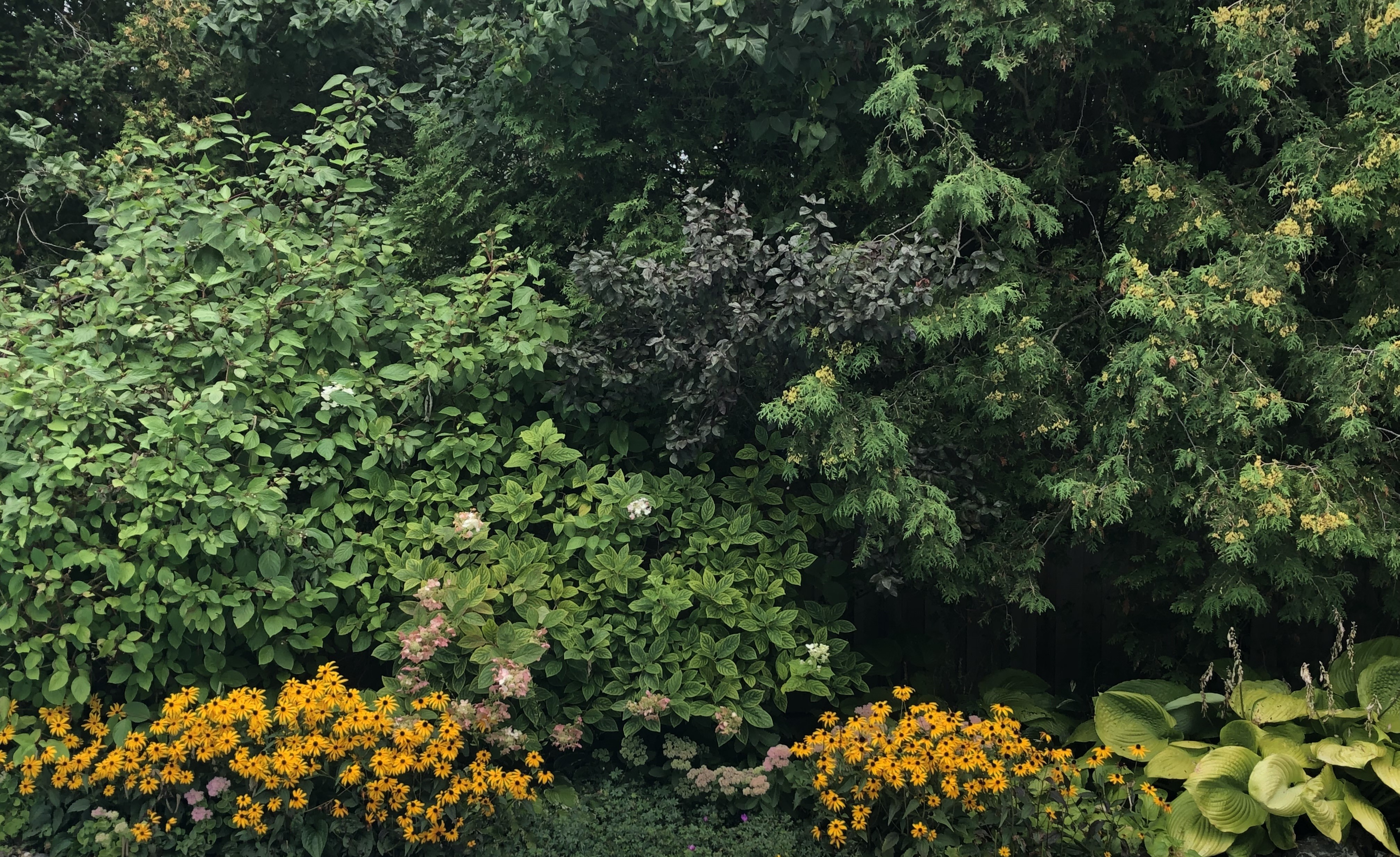
Choosing the right plants for your space
Depending on your needs, there are a few different options to choose from. Evergreens, deciduous trees, flowering shrubs, and ornamental grasses can all help play a role in creating privacy. You don’t have to pick just one type—if your planting area is wide enough, layer your plants and create a mixed border.
Start with a row of evergreen shrubs along the back. Add flowering shrubs and/or ornamental grasses staggered in front, to cover the gaps in the hedge while it grows in. Tuck some perennials and annuals into any available nooks and crannies, and there’s your mixed border. Here are four different types of plants and some good options for each category.
Evergreen shrubs
For year-round privacy, evergreens are the way to go. If you need screening along the borders of your property, they make excellent hedges and will provide privacy through all four seasons.
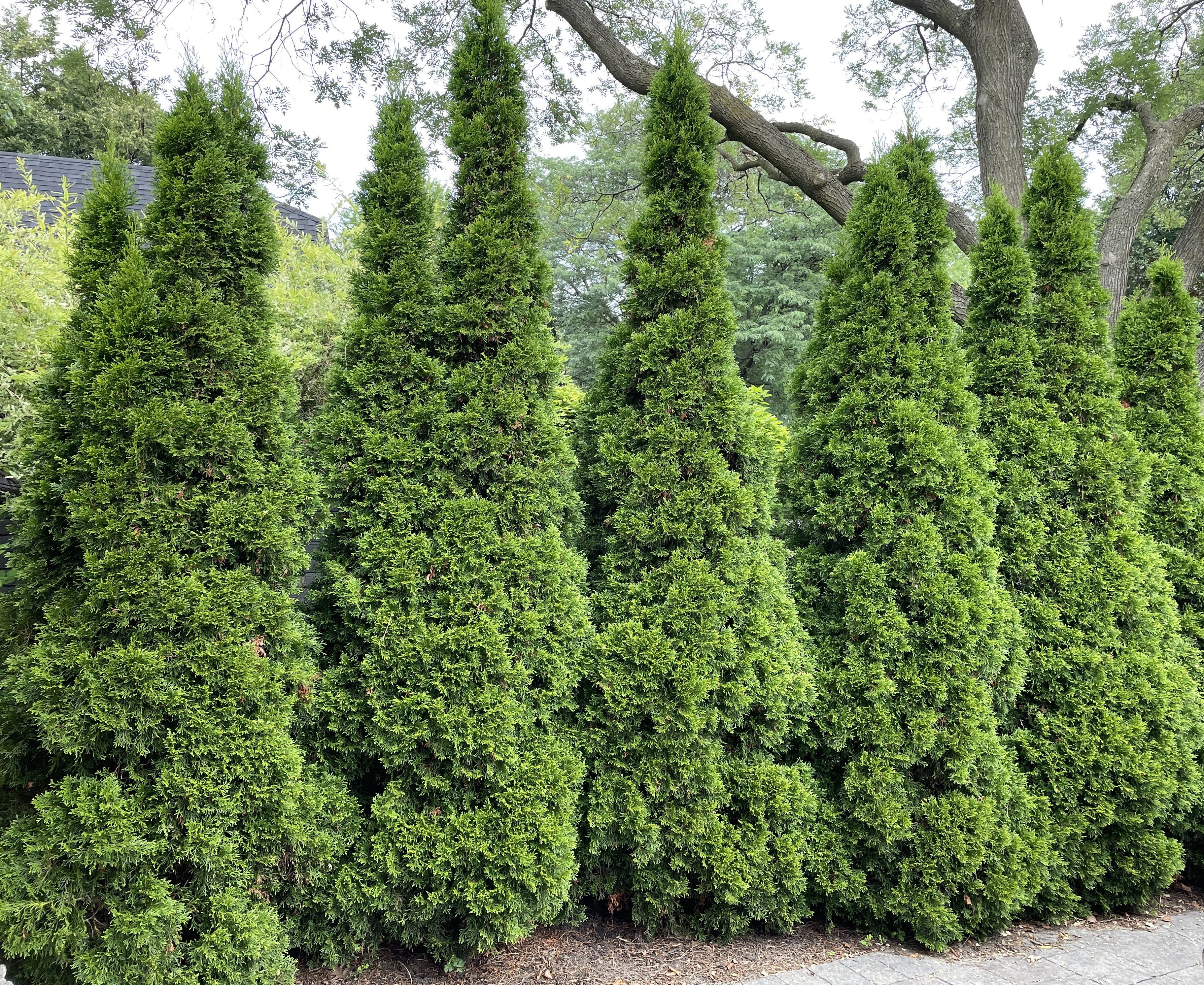
- Name: Emerald green arborvitae (Thuja occidentalis)
- Light: full sun/part shade
- Mature size: 15–20’ tall, 3–4’ wide
- USDA hardiness zones: 3–8
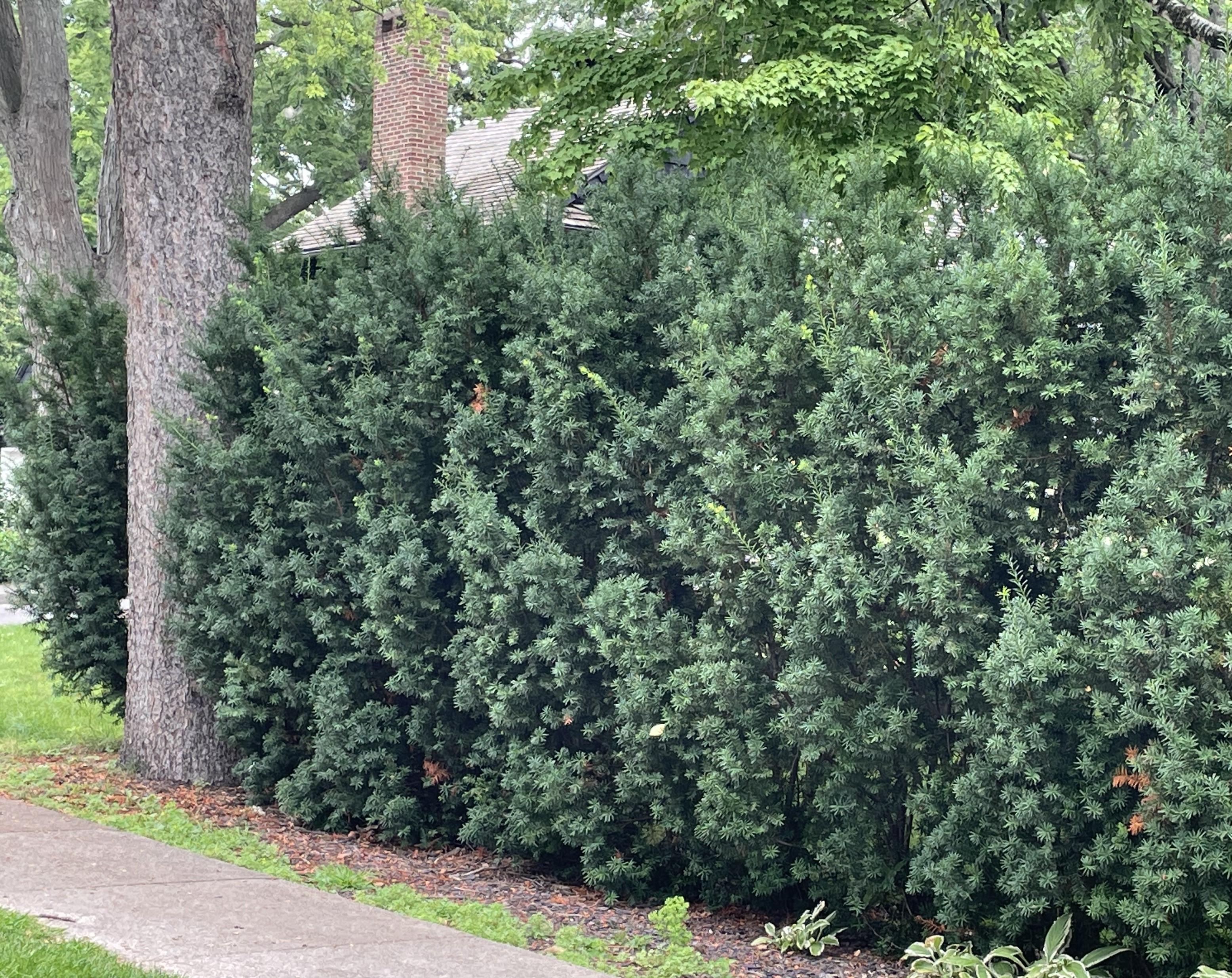
- Name: Hick’s yew (Taxus x media ‘Hicksii’)
- Light: full sun/part shade/full shade
- Mature size: 10–15’ tall, 3–4’ wide
- USDA hardiness zones: 4–9

- Name: Inkberry holly (Ilex glabra ‘Nigra’)
- Light: full sun/part shade
- Mature size: 6–10′ tall, 5–8′ wide
- USDA hardiness zones: 5–9
- Name: Spartan juniper (Juniperus chinensis ‘Spartan’)
- Light: full sun
- Mature size: 10–15’ tall, 4–6’ wide
- USDA hardiness zones: 4–9

Deciduous trees
If privacy is less of an issue in the winter, there are lots of beautiful deciduous trees to choose from. It’s hard to beat a big old oak or maple tree for shade, privacy, and beauty, but not all of us have the space to accommodate a tree that can potentially grow upwards of 100 feet tall and 50 feet wide. There are other options that are smaller and just as beautiful.
It’s important to remember that deciduous trees will not provide much privacy below their canopies. However, with strategic planting they can effectively screen unwanted sightlines higher up in the landscape, like the upper stories of a neighbouring house or structure.

- Name: Flowering dogwood (Cornus florida)
- Light: part shade
- Mature size: 15–30’ tall, 15–25’ wide
- USDA hardiness zones: 5–9
- Name: Ivory silk lilac (Syringa reticulata ‘Ivory Silk’)
- Light: full sun
- Mature size: 20–30’ tall, 15–25’ wide
- USDA hardiness zones: 3–7


- Name: Canadian serviceberry (Amelanchier canadensis)
- Light: full sun/part shade
- Mature size: 15–20’ tall, 12–15’ wide
- USDA hardiness zones: 3–9
- Name: Eastern redbud (Cercis canadensis)
- Light: full sun/part shade
- Mature size: 20–30’ tall, 25–35’ wide
- USDA hardiness zones: 4–9

Flowering shrubs
Flowering shrubs also make great choices—feel free to mix them up for extra interest and diversity. As a bonus, the blooms will attract pollinators to your garden. Keep in mind that since these are deciduous, they won’t provide much in the way of privacy in winter (but will look amazing through the other seasons).
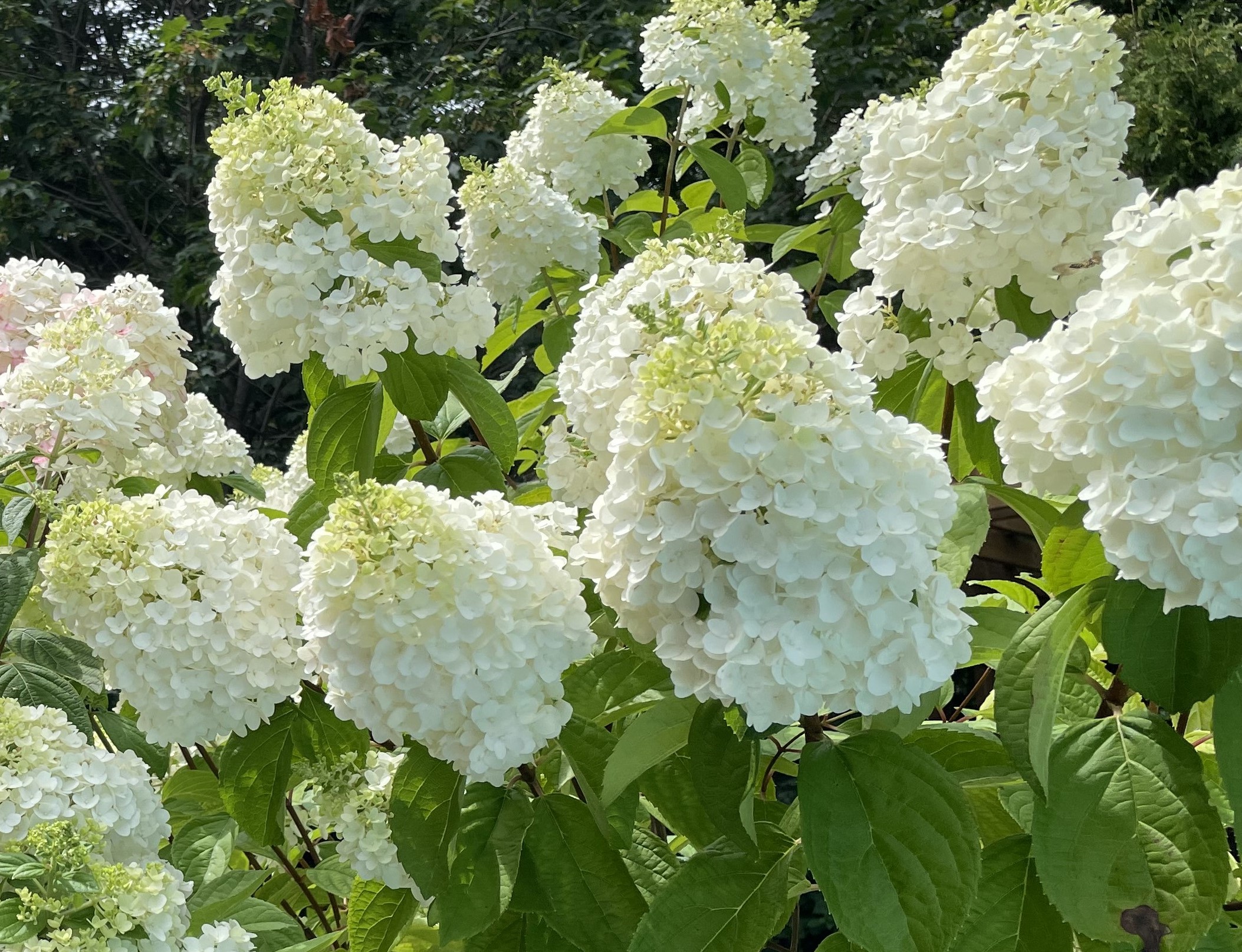
- Name: Moonrock hydrangea (Hydrangea paniculata ‘Kolmakilima’)
- Light: full sun/part shade
- Mature size: 4–6′ tall and wide
- USDA hardiness zones: 3–8
- Name: Black lace elderberry (Sambucus nigra)
- Light: full sun/part shade
- Mature size: 6–8′ tall and wide
- USDA hardiness zones: 4–7


- Name: Bridal wreath spirea (Spiraea prunifolia)
- Light: full sun/part shade
- Mature size: 5–8′ tall and wide
- USDA hardiness zones: 5–8
- Smokebush (Cotinus coggygria)
- Light: full sun/part shade
- Mature size: 10–15′ tall and wide
- USDA hardiness zones: 4–8

Ornamental grasses
Grasses can be really effective at concealing unwanted views, as well as providing structure and movement in the garden. These need little maintenance apart from cutting the old growth down to the ground in spring.

- Name: Morning Light maiden grass (Miscanthus sinensis ‘Morning Light’)
- Light: full sun
- Mature size: 4–6′ tall, 3–4′ wide
- USDA hardiness zones: 5–9
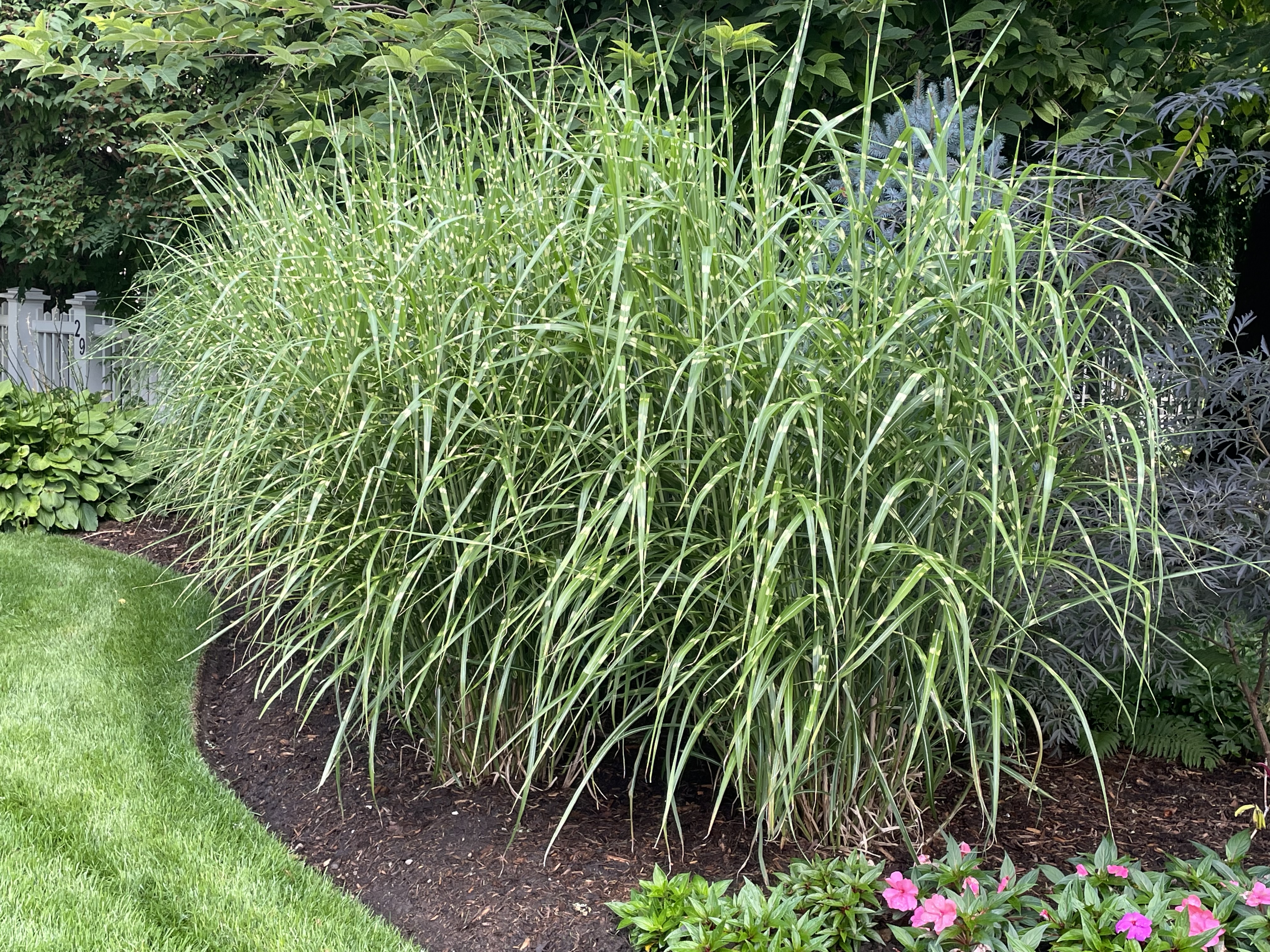
- Name: Zebra grass (Miscanthus sinensis ‘Zebrinus’)
- Light: full sun
- Mature size: 5–7′ tall, 4–6′ wide
- USDA hardiness zones: 5–9

- Name: Karl Foerster feather reed grass (Calamagrostis x acutiflora ‘Karl Foerster’)
- Light: full sun/part shade
- Mature size: 4–6′ tall, 2–3′ wide
- USDA hardiness zones: 4–8
- Name: Northern sea oats (Chasmanthium latifolium)
- Light: part shade
- Mature size: 3–5′ tall, 1–2′ wide
- USDA hardiness zones: 3–8

FAQ
I don’t have a yard or garden, only a patio. How can I create privacy?
You can use containers to plant dwarf evergreens, flowering shrubs, and grasses. Containers have the benefit of being portable, so you can move them around and place them wherever you need screening. Choose the largest container you can, which will give the roots ample space to grow. Containers will need to be watered more often than plants growing in the ground. An important thing to remember is that in climates where temperatures routinely dip below freezing, containers need protection. If possible, keep the container plant over winter in an unheated storage area, or try to shelter it outside with a windbreak.
How do I get my evergreens to become bushier?
Pruning the top few inches off a growing tip will help create lateral buds, which makes the shrub grow more densely (never remove more than 1/3 of the plant at once). The best time to prune is early spring, just before new growth begins, but it can also be done in early summer.
How long will it take for my plants to reach their mature size?
That is the million dollar question, and there is no one answer. It all depends on each individual species, the growing conditions, their size when planted, etc. But as a very general guideline, in optimal growing conditions evergreen and flowering shrubs can take 3–5 years, while deciduous trees can take much longer, closer to 10 years. It’s difficult to be patient when we’d like instant results. In the meantime, try placing some containers or structures like a trellis to help fill in the gaps while they’re growing.
Image credits:
Inkberry holly: “Ilex glabra Nigra” (David Stang, CC BY-SA 4.0)

Spartan juniper: “Spartan juniper” (azmichelle, CC BY-NC-SA 2.0)
Canadian serviceberry: “Canadian serviceberry” (Anita Gould, CC BY-NC 2.0)
Eastern redbud: “Columbus redbud” (Downspec , CC BY-SA 4.0)

August 26, 2026
Leave a Reply